
Acidification treatments
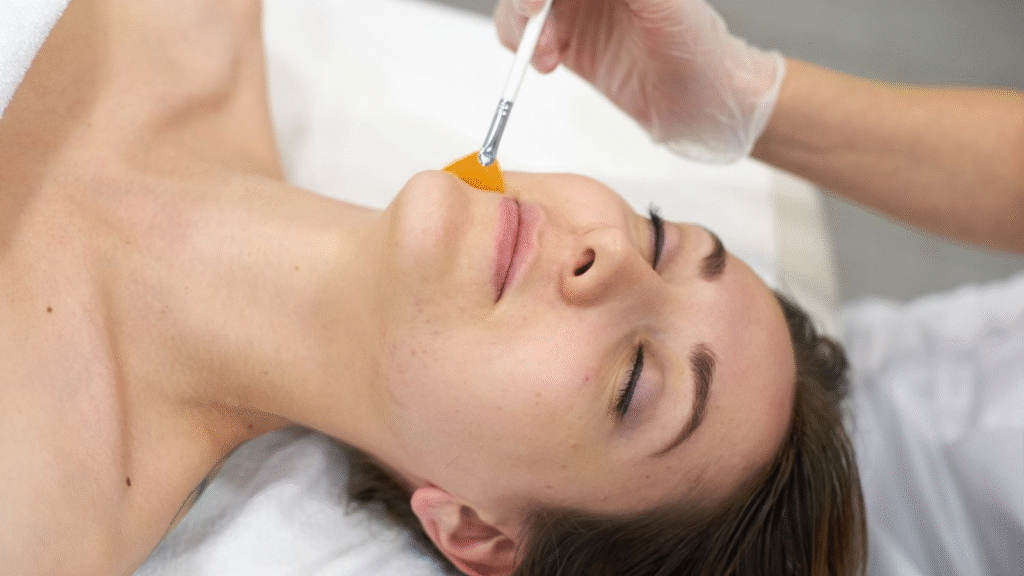
Chemical peel – Skin rejuvenating and brightening treatment
Chemical peels are an effective and safe skin care method that renews and smoothes the surface layer of the skin. The treatment can improve the structure and appearance of the skin, treat superficial lines, oily skin, blemishes, acne scars, as well as pigmentation changes and photodamage.
Who is chemical peeling suitable for – and what does it help with?
Uneven surface texture, dullness, “gray” skin
Superficial lines and fine wrinkles
Oily/combination skin, blemishes, blackheads
Acne marks and scars (surface softening)
Pigment changes and light damage (sunspots)
Enlarged skin pores and shine
The depth of treatment and acid combinations are chosen during the consultation. For sensitive skin, you can choose mildest protocols (e.g. PHA/enzymes, Environ Cool Peel approach).
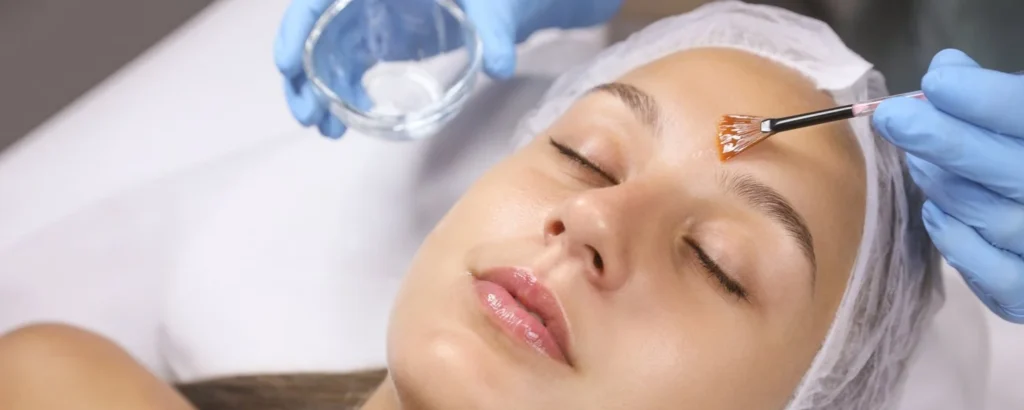
What acids do we use – a short “map”
AHA (lactic, mandelic, glycolic acid): brightening, moisture binding, fine lines
BHA (salicylic acid): sebum/pores, impurities
PHA (gluconolactone etc.): sensitive/reactive skin, barrier support
TCA (shallow–medium depth, e.g. BioRePeelCl3 protocol): a combination approach that smooths the texture and brightens
Enzymes: very gentle, “polishing” type finish
Examples by brand
BioRePeelCl3: two-phase, TCA-based biostimulant a protocol that combines exfoliation and skin-activating ingredients – often with little recovery.
iS Clinical (Fire & Ice): “mild resurface” + calming – glow without long downtime.
Environ Cool Peel: recurring mild scrubs that respect skin barrier.
Exception: wide range of AHA/BHA/PHA combinations, tailor-made for different indications.
Before treatment – preparation
Pause retinoids and strong AHA/BHA products 3–5 days before (7 days for sensitive skin).
No strong sunbathing/solarium/self-tanning 1–2 weeks.
Tell me about your medications (eg. photosensitizing or acne medication), cold sensitivity/herpes susceptibility.
Arrive clean skin preferably; shaving the night before.
If necessary, we will patch test and our instructions advance home care (same sets at home = better response).
The course of treatment – what happens at the reception?
Skin analysis & plan – the acid type, concentration and number of layers are defined.
Cleaning & pretreatment – makeup/impurities removed, skin balanced.
Acid liquid – controlled distribution; knowledge is warmth/tingling.
Neutralization/removal (depending on protocol) + preservation (serum/mask).
Protection – SPF daytime and home care instructions.
Duration: of. 30–60 minutes depending on treatment and area choices.
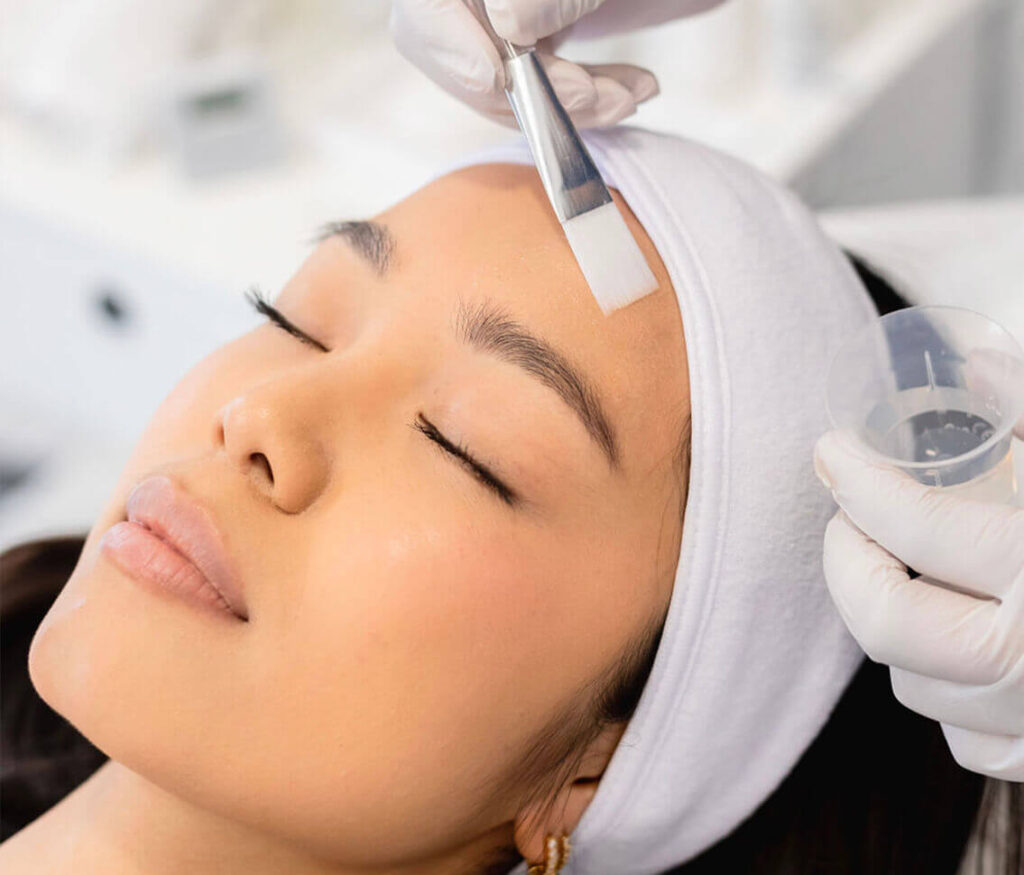
The course of treatment – what happens at the reception?
Skin analysis & plan – the acid type, concentration and number of layers are defined.
Cleaning & pretreatment – makeup/impurities removed, skin balanced.
Acid liquid – controlled distribution; knowledge is warmth/tingling.
Neutralization/removal (depending on protocol) + preservation (serum/mask).
Protection – SPF daytime and home care instructions.
Duration: of. 30–60 minutes depending on treatment and area choices.
After treatment – what to expect?
0–24 hours: Slight redness/warmth possible.
1–3 days: the skin may feel tensely; light peeling may begin.
3–7 days: microdermabrasion/Shedding is normal (don't pick).
7+ days: the surface often shows clearly smoother and brighter.
Aftercare:
SPF 30–50 daily; avoid direct UV exposure 1–2 weeks.
No sauna, hot showers or intense training 24–48 hours.
No retinoids, AHA/BHA peels or granular peels 5–7 days.
Moisturize and soothe (hyaluronic acid, panthenol, ceramides).
Apply makeup when your skin feels comfortable (often the next day).
Contraindications (to be assessed during consultation)
Active dermatitis/infection, open wound, fresh tan, pregnancy/breastfeeding (some of the protocols can be transferred), isotretinoin in recent months, keloid tendency, severe rosacea in exacerbation phase, herpes in the active phase (prevention if necessary).
Treatment recommendation – series and maintenance
Series: usually 4–6 treatments, 2 weeks intervals (depending on the indication).
Maintenance: 8–12 weeks at intervals or seasonally.
Combinations: LED (sedation), Hydrafacial (clean base), Dermapen 4 (various times), BBL/cold plasma (individual schedule). Combinations are planned safely.
Frequently Asked Questions (FAQ)
Does peeling hurt?
Not really – you know warmth and slight tingling. Sensitivity is taken into account in concentrations and exposure time.
Does your skin always peel?
Not always. Some protocols are designed to produce minimal scaling, some may peel more prominently. Both can be effective.
Can I have the treatment in the summer?
Yes, when UV protection is in order and fresh tan is avoided. We will provide detailed instructions.
When will I see the results?
Often the first week Over time, glow and smoothness improve; pigment/texture changes develop weeks–months during the series.
Why choose Vitaroma for acid treatment?
Professional series: BioRePeelCl3, iS Clinical, Environ, Ekseption
Customized protocols for different skin types (also options for sensitive skin)
Safety first: accurate analysis, correct concentrations/times, clear aftercare
Realistic expectations and before-after monitoring if necessary
Book an appointment for a chemical peel →